You are here : Home > 100 years

100 years by your side
Wherever the desire to learn meets the need to act.
At Cegos, we don’t change the world.
But we train and support the people who do.
To celebrate 100 years of training, impact and progress, our clients, learners, and partners worldwide have agreed to share their experiences with Cegos.
Unique journeys, one-of-a-kind projects, pivotal learning moments, long-term partnerships… all these demonstrate that training is a powerful driver of individual and collective transformation.

Generali
Sophie Jallabert & Hugues Aubry
Access subtitles in your language in the video settings in the top-right corner

Moeve
Rafael Fernandez Qundez, Director of Talents & Culture
Access subtitles in your language in the video settings in the top-right corner

Inetum
Pedro Gomes Santos, Group VP - CEO Portugal
Access subtitles in your language in the video settings in the top-right corner

Nespresso
Jérémy Courbot, Skills Development & Sponsorship Manager
Access subtitles in your language in the video settings in the top-right corner

Heineken
Daniela Castro Pereira, Consumer Connections Senior Director
Access subtitles in your language in the video settings in the top-right corner

Carrefour
Vanessa Kolasniewski & Canan Isit
Access subtitles in your language in the video settings in the top-right corner

Sungrow
Chen Wang, Dean of Sungrow Business Institute
Access subtitles in your language in the video settings in the top-right corner

Pauline Déroulède
Pauline Déroulède, Wheelchair Tennis Paralympic Champion
Access subtitles in your language in the video settings in the top-right corner

Crescimentum
Nildo Marinho, Trainer
Access subtitles in your language in the video settings in the top-right corner

SNCF
Stéphane Zasso, Management Controller
Access subtitles in your language in the video settings in the top-right corner

Cegos UK
Emily Link, Director and Trainer
Access subtitles in your language in the video settings in the top-right corner

TD Synnex
Gunther Stengl, BDM Technical Services Alliances
Access subtitles in your language in the video settings in the top-right corner

Allianz Italy
Angela Cafarelli, Head of Learning and D&I Culture
Access subtitles in your language in the video settings in the top-right corner
Our Manifesto


“For a century, Cegos has been supporting the transformation of organizations, jobs and people.
Our role is far beyond sharing knowledge: we help everyone to progress, get ahead, and perform better in a changing world. This perspective, rooted in reality but focused on the future, guides everything we do.” Benoît Felix CEO of Cegos Group
1926 - 2026: 100 years by your side
Since 1926, the Cegos Group has been supporting transformations in the world of work, both in France and internationally. From Scientific Management to the challenges of artificial intelligence, through the emergence of modern management, the digital revolution, and the transition to sustainability, this video traces a century of evolution at the heart of major economic and societal shifts. Through this immersive journey, discover how Cegos has anticipated, adapted, and innovated to train and support those who are transforming the world.

Sharing experiences: a fundamental part of Cegos' DNA
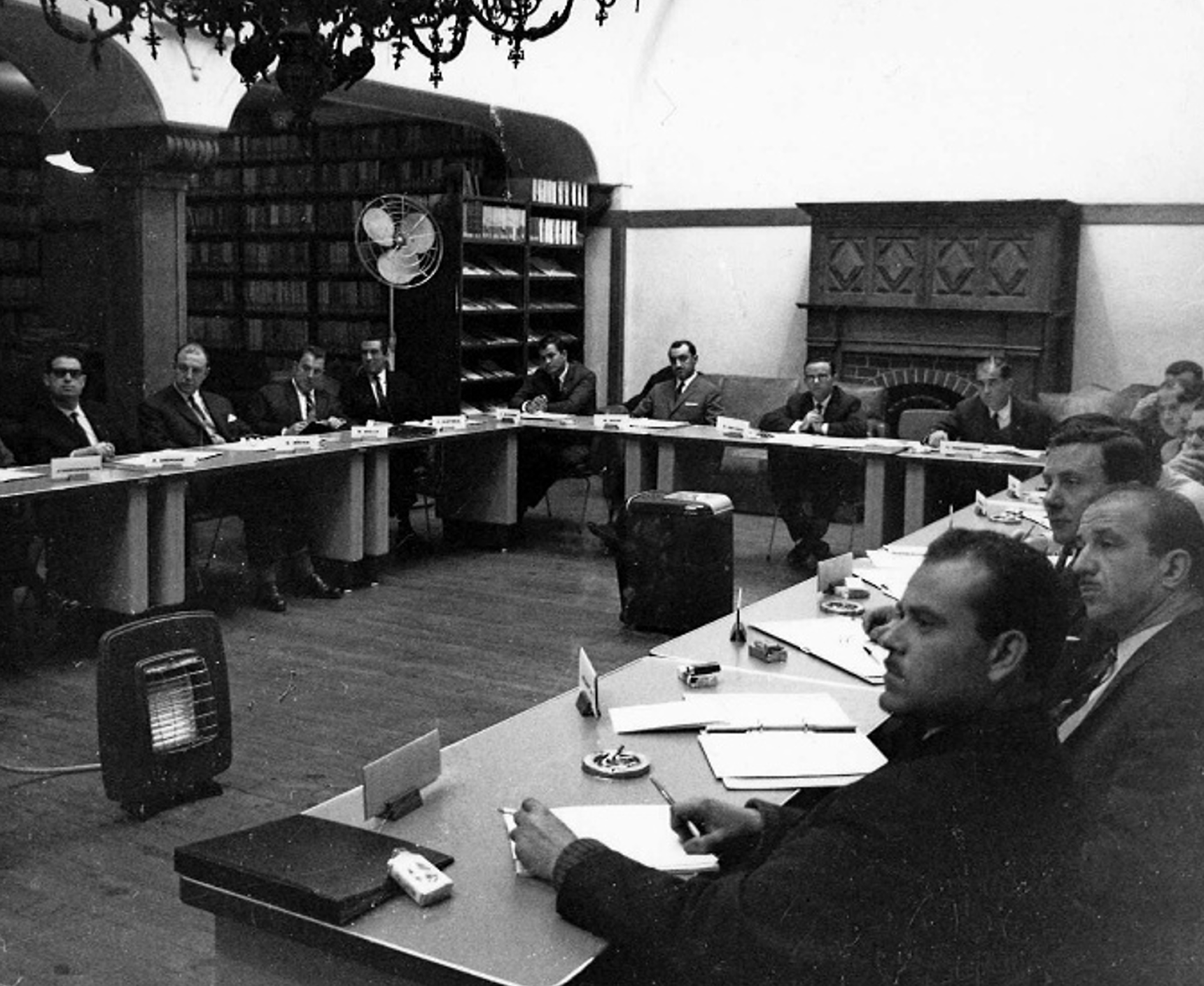
In 1929, Jean Milhaud brought back a method from the United States that was still unknown in France and Europe: sharing experiences, a practice that immediately became Cegos' signature. He summed up the spirit of this approach with a phrase that has become emblematic:
“In a group of twenty people who sincerely exchange their experiences, if each person gives up one supposed secret, they gain nineteen experiences.”
This collaborative dynamic contrasted sharply with the “culture of secrecy” that dominated French companies at the time. Cegos turned it into a driver of transformation. In 1930, it opened its first study groups, where small and large companies—such as L'Oréal, which came to present its practices for sharing profits with employees—compared their methods.
For Milhaud, “taking a man out of his job and making him understand what is happening elsewhere… is the best cure for the excesses of individualism.”
“Useful” innovation: Cegos expertise at the service of performance
Cegos' second key strength lies in the central role given to innovation, method engineering and research. This commitment was first demonstrated in 1927 in a study on cost price calculation conducted by engineer Émile Rimailho. Published in 1937, this method became a true industrial “manifesto” that profoundly influenced French companies and public authorities. By providing a method that could be implemented immediately, Cegos positioned itself as an essential methodological reference and began to develop its training activities for companies.
Whether it's digitalization, managerial transformation or CSR, Cegos maintains the same guiding principle: innovate only if it has an impact, improves performance and strengthens skills and organizations. It is this requirement that remains one of the foundations of Cegos' strength today.

Management: an idea imported to France by the president of Cegos in 1956
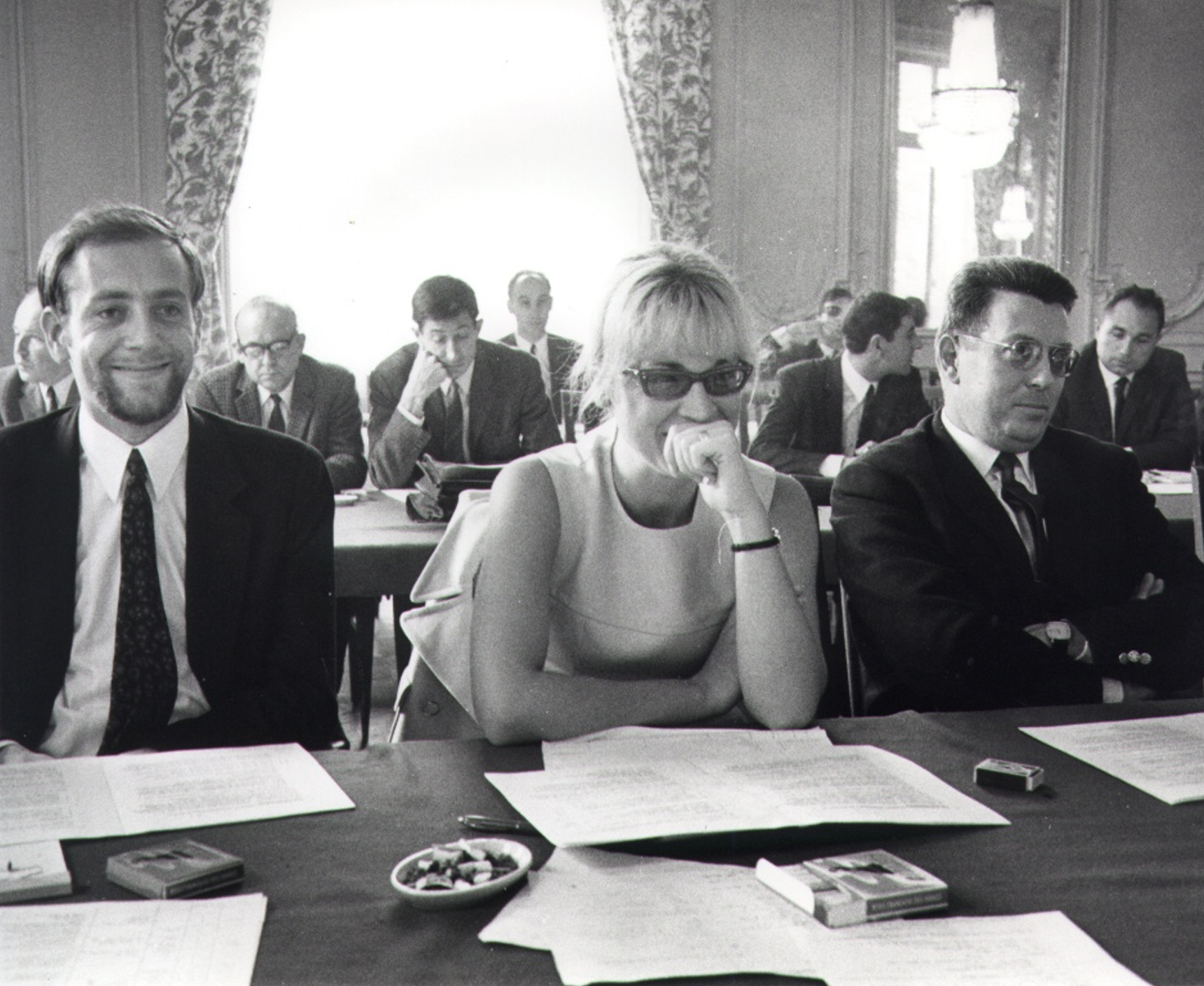
Cegos played a decisive role in introducing the concept of management to France. During productivity missions carried out in the United States in the 1950s, Cegos consulting engineers discovered a new management style. Octave Gélinier recounts his shock at the American principle of “setting goals for people rather than rules.”
He returned convinced that a new system needed to be adapted to the French reality. This led him to develop what he called “French-style management,” which he promoted through his iconic training course “The Art of Leadership” (1956), which became known as the “business school for leaders.” The executives trained went on to play a major role in the French economy. This pioneering approach explains why Gélinier was dubbed the “French pope of management” and why Cegos remains a historic reference in this field today.
Today, Cegos remains one of the world leaders in professional training in the field of management. Its teams around the world continue to disseminate the most effective new approaches, whether in skills-based management, inclusive leadership, or transformation models based on collective intelligence.
International openness: a constant drive since the very beginning
Cegos' international spirit is not a recent development: it has been part of its trajectory since the 1950s. Beyond study trips to the United States, Cegos quickly became a key player in Europe and around the world, establishing “small Cegos” entities in Italy, Spain, and Portugal. In the same vein, Cegos launched cooperation activities in North Africa and French-speaking Africa, assisting young states in structuring their administrations and training executives. This expansion momentum gained strength in the 1960s, with new Cegos locations in Germany, Great Britain, and Switzerland, then gradually spread outside Europe. Cegos established itself in China in 1997, created Cegos Asia-Pacific in Singapore in 2012, and opened a regional platform in Chile in 2015, followed by Mexico in 2017. More recently, the acquisition of Crescimentum, Brazil's leading leadership training provider in 2020, illustrates the continuity of this strategy and confirms Cegos' position as a global player in skills and leadership development.